Showing posts with label Africa. Show all posts

Nov 11, 2012

Children Cheerfully Change Choices


The three of us go to
Amboseli National Park
If I went back in time 5 years, and asked myself how I pictured things working out there are a few things I expected. I would likely be happily living in Colorado, I'd have some nice office job, and having a baby would be the last thing on my mind. How things have changed. I'm living in Kenya, starting and running a small factory, and my daughter is due in January.

Even though I made every key decision along the way, daily I am surprised when I step back and realize where where this path has taken me. The biggest surprise, without a doubt, is the baby. I never really wanted kids before. I like children, to be sure, but I also like giving them back to their parents. I'd looked at a lot of people around, and wasn't convinced that a massive lifelong responsibility would really improve the quality of my life. Objectively, the decision to not have children isn't hard to understand. There is no doubt that kids are messy, expensive, and a constant drain of attention. I've lived my life in such a way where I would regularly reboot my life, in an exotic land, starting with little more than vague idealistic intentions. I could afford to take gambles like that, because at the end of the day the only person who pays the consequences is myself or another adult that simultaneously chose the same thing.

I moved around a lot of as a child, and was often the 'new kid' at school. And I don't feel bad about it, it was a remarkable childhood that helped me launch into a deliberate life spanning dozens of countries. That being said, I never really had a say in it. Several years ago, I had a friend who was thinking about moving and she talked about how she asked her 5 & 7 year old their vote on it. That struck me as ludicrous, why would an adult who understood the opportunities and challenges for the whole family share massive life-changing decisions with those who most certainly don't. I said as much, and she gave me a puzzled look. She thought it was ludicrous NOT to consult them, as it was their life too. That insight knocked me back, pretty far. A corollary of my 'Live Deliberately' creed is to actively support and encourage others to live their own lives deliberately. Apparently, I'd been operating under the assumption that 'live deliberately' doesn't apply to those under 18, which really doesn't make any sense.


Although I had never really considered having kids before, as this moral insight cut deeper into my thoughts and made up my mind for a child free life. For many years, I've been saying I want to live 'an exceptional life,' and carefully make my own decisions and whenever possible not let any others in a position where they could make them for me. I may be particularly sensitive around this issue, because I had so little say in how my childhood unfolded. This perspective has certainly doomed many wonderful romances, but it also freed me to figure out what I wanted in life and doggedly pursue it without having to ask permission. My family has long since come to terms with the fact that I will go anywhere in the world, and do whatever I want, without asking. In some cases, happily, I found people whose own life path kept us together. When my brother and I quit everything for an extended trip through Latin America we shared a tight bond. I found that bond stronger because I was secure in the knowledge that he was choosing his own path, that he also chose to travel together. There is a real and profound freedom in arranging ones life with only these kinds of relationships. I was wise enough to recognize that if I had a spouse, or a child, their deliberate life might not correspond with mine. Unless I wanted to develop a dictatorial, 'Father knows best,' personality (which just isn't in me) there would inevitably be compromises.

All that still makes sense to me, so I'm more than a little bewildered that I've now come to the opposite conclusion. Although Erin has long wanted a child, I shocked both of us when I told her I wanted one too. What happened is, the whole question got elevated to a another level. This, I think, deserves some exploration.

Although I've always enjoyed playing with little cousins, or tickling friends babies, children haven't been a significant part of my life. Few of my close friends have children, and I never made an effort to seek kids out, so I could easily go months without saying a word to a little person. That changed in Tanzania, quite a bit. Erin was working at a small school, IIS, and very quickly our lives started revolving the school. I started out the endeavor by substitute teaching 10 year olds, and found myself happily enmeshed in almost every school event. The school held regular events, from school plays to fundraisers, and they expected that the teachers, like Erin, would work them. Sometimes that got tiresome, when yet another Saturday night needed 'volunteers' it got frustrating. But then we'd try to figure out what else to do, it usually turned out that the school event was the most interesting thing happening. There is not a lot going on in a small town in rural southern Tanzania, so a Saturday night spent selling drinks to friends at a concession stand was better than the alternative of sitting at home surfing the internet (until the power went out). As I wasn't a teacher I didn't have to volunteer, but most of my friends were doing it, so otherwise I had little to look forward to but a lonely night at home.

Very quickly I realized that none of these parents had given up on their own exceptional lives to raise a family. Quite the opposite, in fact. We became close to a Finnish family with three kids who'd left their lives in the cold north to have a adventure in Africa. About half of the students were children of expats, and none seemed like they were being dragged around the world unwillingly. I remember being fascinated as a child by the animal pictures in my families encyclopedia, so I can only imagine what it'd be like growing up next to one of the largest national parks in Africa. None had X Boxes, but since no one did they didn't whine about spending most of their free time outside and exploring. Their childhood is pretty exceptional in it's own right. Although they had a lot more responsibilities, their parents didn't seem like they were sacrificing as much as choosing different exceptional experiences. Its true that none joined Erin and I on our shoestring Xmas trip around Malawi, including riding the back of pickups. But instead many piled everyone into the family car and went off to see the world. It's a different experience, to be sure, but I was no longer quite so certain that my way was the best, even for me.

Most couples are 'nesting' when 6 months pregnant.
We went to Egypt
Most of what hit home was getting to know the kids. After my brief stint of substitute teaching finished up, I joined Erin to run the weekly chess club, and eventually worked as a science and math tutor. Every day there were little people running around, causing trouble, and innocently commenting on the world in ways I find utterly fascinating. I found that I love explaining things and getting a glimpse of the world from their eyes. Sometimes, rather than looking forward to sending them back to their parents, I was annoyed that their parents were taking them away from me. I'd find myself developing ideas about how best to treat a certain child, but was forced to recognize that I hadn't earned the right to my opinion. Almost by accident, I caught myself daydreaming about 'if I had a kid we'd…' with an impossibly long list of what I'd imagine would be fun for both of us.

All of this came together, but it wasn't an instantaneous shift, it was long and slow with plenty of setbacks. But all the sudden, when I did one of my periodic 'what do I want out of life' gut checks I realized that the deliberately chosen life I wanted included progeny. There absolutely will be compromises I wouldn't choose if I was a bachelor, but that is inevitable in all deliberate decisions. Whenever I choose a new country to visit, I simultaneously don't choose all the others that I would also like to see. I probably can't have all the crazy Saturday nights on the town I've enjoyed so much, but the reality is they haven't been much of a priority for about half a decade. And for all the sacrifices, there will hopefully be a lot of rewards too. I can't wait until my daughter clobbers me in chess or squeals in delighted fright when she sees a herd of elephants. Giving those experiences up so that I can retain the freedom to drop everything and start over alone on a shoestring suddenly seems like the sacrifice.

I won't ever become one of those people that thinks everyone they know should have kids. The world already has more than enough babies and there is no doubt that many wonderful life paths never involve procreation. But if I could go back in time, I would try to soften my own resolve about the issue and would encourage others sharing my former perspective to consider what I've written. If you've got a partner craving kids, or are a confirmed bachelor that isn't quite ready to give up on the idea, it might be worth it to find some way to integrate children into your life for a while. Maybe you'll come around to where I'm at now, or maybe you'll learn for sure that you don't want your own. But either way, it not a deliberate life if you don't really consider what life isn't being chosen.

Then again, my plea for unsure people to integrate kids into their life probably has an agenda. In a couple months, I'm going to want babysitters!

Mar 3, 2012

Ancestors affect an American-African

My American-African Fiance

I'm now engaged to an American-African. Identity is a fickle thing, legal, social as well as individual.  That's how, after a long and lovely relationship I asked an American woman to marry me. A few short months later, I found myself engaged to a resident of Africa.

A lot changed, and nothing. After the painfully slow machinations of the government Erin got her Kenyan work permit.  That means, at this moment she is legally a resident of two different East African countries. I'm being facetious, but not entirely. Most African-Americans have a much smaller personal connection to Africa than Erin and I do.  At this point we've spent about 5% of our lives in Africa, but most African-Americans haven't stepped foot on the continent, nor have any of their ancestors in living memory.  At what point does ones physical location completely define ones continental or national affiliation?

For me, calling Erin an American-African is an amusing play on words, but for others these kinds of distinctions are vitally important.  I have a good white South African friend here who has told me a bit about his experiences.  During the crumbling of Apartheid in his country the white people had a lot of deplorable reasons to maintain their stranglehold, but they also had some legitimate concerns.  As the black majority began to flex their strength some advocated 'pushing the settlers to the sea.'  That's made for a powerful sentiment, but the reality of it was complicated.  Many parts of Africa had been heavily colonized well before North America was, with the first Dutch settlement established near Cape Town in 1647.  So these settlers had no other homeland since well over a century before my country got around to existing.  Even most black South Africans aren't 'native' depending on how one chooses to define it. The majority of the black populations ancestors moved in from other regions in the north about a 1000 years ago (which means it's closer to today than it is to the time of Jesus).  That's a long time, to be sure, but their people have only been in the region for less than three times the as long as the Europeans.
This fear of being 'pushed to the sea'  is why my friend said 'no white South African in his right mind would have voted for Mandela' (in 1994.) What happens to someone who doesn't have a right to exist anywhere on earth?  My friend quickly followed up his assertion by saying 'but then, Mandela's presidency was nothing short of a miracle.'  Balancing the opposing demands and rights of the whole population looked to be an impossible achievement, but one that has (with some hiccups) come into being.

I focused out South Africa only because it built to a crescendo within my life time, similar stories play out all over the continent.  I spent a a month living on a farm in Tanzania with three generations of farmers.  Although white, they easily identified themselves as Tanzanians in every way that matters.  Serious debates about who 'belongs' in a place is also an active issue in Kenya today.  During the colonial era tribes were pushed around as English settlers claimed vast swathes of land.  In many cases, entire tribes uprooted and moved to the ancestral land of other tribes.  Today on one side you have some angry that they have rights to land because their recent ancestors lived there.  On the other hand, todays residents also justifiably say they have rights to it because they have lived there for generations.

Identity and legal residence has been a vital issue for me too.  There was a time, while Erin and I were living in Tanzania, that I was an 'illegal.'  My visa took a long time to process through, and in the meantime the clock had run out on my three month 'Tourist Visa.'  Suddenly I had to live with the constant fear that if someone chose to make an issue out of it I could be deported on a moments notice.  Although I'm happy to still have an American passport, I didn't have as much to return to as my home, vocation, worldly goods and Erin were all in Tanzania.  If I was robbed, I would have had to seriously debate going to the police because the cost to me could have been far worse than what would happen to the actual criminal.

Sedona Arizona with Rein Teen Tours-4
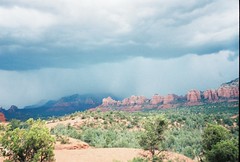
Arizona, a beautiful place with ugly laws
Suddenly I had a lot more empathy for the illegal immigrants in America.  Although they always disgusted me, I now understand the horror of the recent anti-immigrant laws in Arizona and Alabama.  For me, at least I made the decision to come to Africa as an adult equipped to deal with the consequences.  For immigrant children who know nothing but life in America, and want to contribute, their nebulous status is not only dangerous and economically stupid, it's profoundly immoral too.  But it certainly gets worse, at least children born in the US are automatically granted citizenship, this is not true elsewhere.  In China and Switzerland, for example, you can have multiple generations of immigrants born in the country.

The point of this post is to show that, ultimately, our concepts of nationality are fundamentally arbitrary and based on the flawed rules of men not any higher morality. Congress could easily eliminate millions of criminals from the country by simply making their immigration legal. Those freshly minted Americans would have the prospects to add more to economy, serve in the military, pay into social security, and consider the police allies not enemies. It may seem outrageous today, but I see it as inevitable evolution.  Our modern ideas of nationality aren't new, the first evidence of something comprable to a passport was in the Persian empire in 450BC.

If we are indeed living in an era of globalization, it's tragically amusing that we're struggling with problems that exist largely because of concept of nationality established two and a half millenniums ago.

Jan 14, 2012

The Wedding-Industrial-Complex

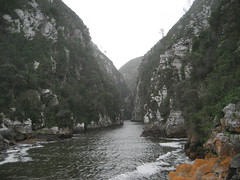
Storms River South Africa-125
Storms River, South Africa
South Africa has some of the oldest earth on earth.  Accordingly, it has some astonishing mineral reserves.  Since they started digging for it, it has been one (if not the) leading source of gold, platinum, diamonds (and much else).  This simple fact has altered a country, a race, the continent and the world for generations.  It is why South Africa has developed (and struggled) leaps and bounds beyond any other sub-saharan African country, and has since the late 1800s.  Today, the 18% of that countries economy that mining fuels keeps the country vibrant and growing even when the rest of the world economy struggles.  The simple fact that diamonds are an integral part of todays wedding ceremonies has much more to do with a guy named Cecil Rhodes than a naturally occurring stone.

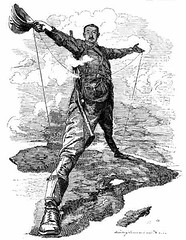
Cecil Rhodes Straddling Africa
Cecil Rhodes, and his plan
It's not only mineral riches, it's also marketing genius.  Diamonds are undeniably beautiful, but they aren't the rarest gem nor are they the hardest material.  They are an essential part of todays engagement and marriage rituals not because of something inherent, but because of a marketing campaign from the 1930s. But the story starts well before that, with Cecil Rhodes a colonial leader of a huge swathes of southern Africa.  He got his start in South Africa, and ultimately bought out the De Beers family farm and used that to secure the majority control of the worlds diamond output.  He was able to pull off this coup because his domain had the vast majority of the worlds diamonds.  He found that by carefully controlling the worlds supply he could set the price for a diamond to whatever he wanted.

After his death, the De Beers diamond company had a near worldwide monopoly of a gemstone that the world cared less and less about (in 1932 worldwide diamond sales were about $100,000.)  So, one day in the 1930s, they hired a firm called NW Ayers in the US to see what could be done.  They tried to rescue a fading concept, the 'diamond engagement ring' through clever product placement.  By 1979 the the worldwide diamond market was worth $2.1 Billion.  Specifics are difficult to find, but in 2005 the worlds output of diamonds were worth  $13.4 Billion.  More than 80% of American engagement rings have a diamond, at an average cost of about $3,200.

Cape Town South Africa-513
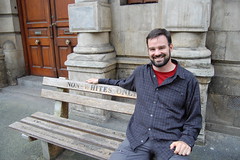
Me, breaking the (Apartheid) law
That campaign has had an unbelievable impact well beyond convincing people what stone engaged women need to wear.  It changed the economy and power base of sub saharan-Africa.  I won't exaggerate a point, but there is a reason people call them blood diamonds.  They've literally held up apartheid regimes, finance civil wars, and make a lot of beautiful people glitter.

That's only one part of what has become an astonishingly lucrative industry.  What I now like to call, 'the Wedding-Industrial-Complex' has taken DeBeers lead and used clever marketing to convince people that an average American couple needs to spend an average of over $26,000 on a single day.  There is nothing wrong with that, and I'm grateful that I've been invited to some truly remarkable weddings.  At the end of the day, it's a couples decision and whatever it becomes should be considered a generous gift to the friends and family that they invite.  But, when Erin and I talk about it, we found that even if we could afford it, it doesn't fit with our quirky priorities. We can think of other things we'd prefer to spend that kind of money on.  That could be a year-long international adventure travel honeymoon, clean drinking water for about a thousand people that don't have it, or sending 650 poor kids to the schools Erin is developing for a year.

Antananarivo-123
Erin in 'Tano
It's right about here that this whole story collapses into something a lot more personal.  People have every right to have any wedding they want, and I've long known that I'm peculiar because many of my priorities don't align with much of the society I grew up in.  What I find remarkable is, I've been fortunate enough to meet another person who shares my peculiar perspective. I love Erin, and have gotten to a point where I can't really imagine my life without her.  I wanted to ask her to marry me, but was stuck.  I don't want to be that guy so obsessed by history, politics and being manipulated by marketing that I can't let true emotions show.  Unfortunately, I didn't know if I had it in me to buy a diamond.

I asked Erin to marry me in Antananarivo, Madagascar.  I'd been thinking about it for a long time, but it wasn't until we were lost in a conversation about how we both wanted to live an 'exceptional life' that I realized that I didn't need or want to wait any more.  The next morning, we got up early and went shopping for rings in the jewelry district.  I started the day by asking her to choose any ring she wanted, quite literally, and without any caveats.  We looked at thousands of rings.  Most of them, obviously, were diamonds.

For her engagement ring, Erin chose an Emerald.
Erins Ring

Jan 8, 2012

An African account, and an allusive alternative approach

Fort Portal for Christmas-5
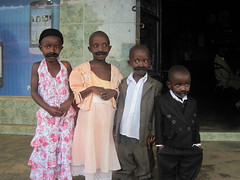
Dressed in their Christmas best, with 'staches!
This blog has been quiet for a long time, and I'm not happy about it.  In part, because I didn't know what the story is that I am trying to tell.  Moving to Africa about a year and a half ago has proven to be a spectacular journey in many ways with lots of experiences that I'd love to share.  But it has all felt different than the travelogue I wrote in this blog in Latin America. At that time my brother Tyler and I were mostly in motion, here Erin and I are mostly settled down.  We've had a lot spectacular trips, but the real essence of living deliberately in this era of my life is the settling into an exotic local (first, the southern highlands of Tanzania, now the outskirts of Nairobi, Kenya.)  On one hand, I need to write about the road trips: seeing elephants and giving kids mustaches.  Those will be a fun stories to tell, easily digested into bite-sized pieces.  But while those kinds of stories were much of what the 'Latin American Epic' was about, they are only a side story to what life is about now.

Mudds visit Mikumi-418The way I see 'living deliberately' today has a stronger focus on meaningful living in the non-traveler world.  It's about navigating the vast poverty, wealth, and complexities of life in Africa.  It's about understanding who is really doing good work here, and trying to join forces with them.  It's about being an uncomfortably privileged racial minority.  And it's also about the slow transition of my fierce personal independence to a union with Erin.  And these kinds of topics are the hardest to write about.  It's all a slow evolution, with plenty of stumbles along the way.  So the real story keeps changing, and most of it is likely half a life time away from a conclusion.  

Mudds visit Mikumi-183
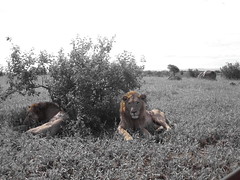
Although getting chased by an african buffalo, or coming face to face with an lion, is something I can detail in a blogpost they don't really have a lot to say on these broader themes.   But without telling the big story it feels unforgivably misleading to tell only about the vacations.  This has been the hardest (and most wonderful) time of my life so to write only about the good times misses the whole point.  So, to date, I have taken the lazy mans compromise and did neither.   But it shouldn't be impossible for me to write about both, so long as I can get used to telling a small part of a story so vast that  I can't see the edges.  And that is my new years resolution.

So, welcome to the next stage of my deliberate life.  I can actually start this story in the same way another did 99 years ago...
"I had a farm in Africa at the foot of the Ngong Hills.  The Equator runs across these highlands, a hundred miles to the north, and the farm lay at an altitude of over six thousand feet.  In the day-time you felt that you had got high up; near the sun, but the early mornings and evenings were limpid and restful, and the nights were cold ..." Karen Blixen, in Out of Africa

Sep 28, 2010

Arrival and an Alarming Actual Allegory

Our arrival to Tanzania was, how shall I put it, dramatic.

Scale of Africa
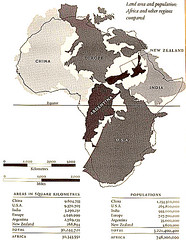
Africa is enormous!
Initially Erin and I planned to make the trek from South Africa overland.  Looking at a world map this appeared to be approximately the same distance as Colorado to NY.  I've driven that a number of a times in a little over a day, so three weeks seemed like plenty of time. I knew it wasn't precise, projecting a globe onto a 2d map skews the size of continents.  Not to mention that the US highway system has a reputation of being a little bit easier to navigate than crossing countries in sub-Saharan Africa.

Before we made it to Africa, however, I found this intriguing map in a history book (the exceptional Africa: A Biography of a Continent by John Reader.) I knew Africa was big, but had no concept that you could comfortably fit India, China, the continental US, Europe, Argentina and New Zealand inside the continent.  In reality, a direct route from Cape Town to Iringa would be farther than going from NY to California.  Not only that, but the most direct route (on sketchy roads) would send us through the painfully war torn Democratic Republic of Congo.  In other words, we decided to fly instead.

When we arrived at the airport in Dar Es Salaam, Tanzania the school thoughtfully had a man named Fouad pick us up.  He seemed to be a gentle man, very helpful and with perfect English.  As we stepped outside the airport, a mob of people rushed into the airport screaming. Puzzled, we asked what was going on... is Bono visiting Africa again?

Fouad paused and calmly stated "A man stole car.  I think they will kill him."        

Wait, what?!?  He explained that because people have little faith in their criminal system people here take justice into their own hands.  Instead of waiting for an arrest, court, and an appeal process a mob may simply stack tires around an alleged criminal and set them on fire.  Often it's a brutal but non-lethal beating, but one study found that in a five year period over 1,200 people were executed by crowds in the city of Dar Es Salaam.  Tanzanian mobs find all sorts of crimes to be capital offenses in Africa, including a shocking amount of  executions because of witchcraft (in the mobs defense, the witchcraft community is far from innocent).  Although many are probably guilty of their crimes, many are not.  Although vigilante justice makes great comic book super heroes it is deeply disturbing to see in reality.    

I find this all horrifying, but an argument could be made that as an American my perspective is hypocritical.  Although I don't support it, my country does have the death penalty.  Furthermore, it wasn't until 1968 that the US got serious about ending the practice of public lynching.  However, my problem is about more than the terror an individual would feel if chased by a mob.  It's also the symptom of a broader problem that hurts the prosperity of the country.  People take justice into their own hands because they fear, right or wrong, that if they went to the police a criminal need only pay a bribe to be set free.  Broadly perceived corruption, whether real or not, cripples society as a whole.  For example, if most people believe a small bribe will get them out of a traffic ticket there will be more bad drivers and more people die as a result of reckless driving.  The same concept applies on every level of society ranging from who gets elected to how businesses operate.  A just rule of law can make a society prosper.  

For example, despite this frightening story Tanzania is a far more peaceful place than the United States.  The Global Peace Index distills an array of complex statistics, ranging from wars to number of homicides, about a nations relationship to violence into a single number.  Tanzania is consistently ranked one of the most peaceful in Africa and far higher than the US.  However, concerns about justice and the rule of law inhibit development in a self perpetuating downward spiral whereas these particular problems aren't really a concern in the US. This real and imagined corruption, and the societal reactions to it, hold back this rich and kind society from profiting from its peaceful nature.    

Sep 19, 2010

Colorful Cape Kingdom Kaleidoscope

Cape Town South Africa-92
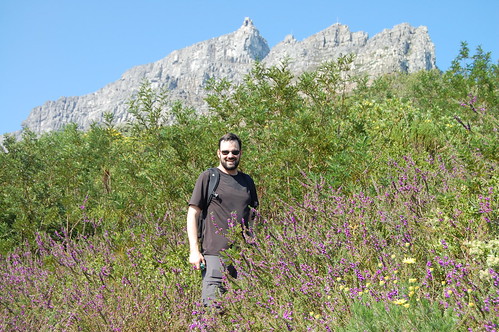
Micah in front of Table Mountain in Cape Town
    In the last post I wrote about a nation that was given independence by South Africa, until Mandela welcomed it back into the country in 1994.  For the sake of symmetry, after our visit to the Transkei Erin I went to a kingdom that South Africa, also through Mandela, gave to the whole world ten years later.  It's a fascinating place, and one that goes far deeper than stories about kings, politics, or even human beings.
Floristic Kingdoms
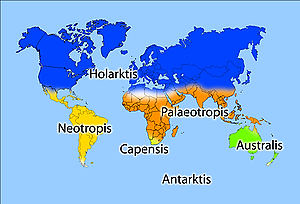
The Floristic Kingdoms


Cape Town South Africa-205   When studying where flowers exist botanists divide the world into six broad floristic kingdoms.  One can find many kinds of flowers, ecosystems and climates within a each kingdom but they share enough characteristics to be clustered together.  Most kingdoms span many countries and even continents.  I personally visited over thirty countries across the Northern Hemisphere before I stepped foot outside of a single kingdom.  When I finally did, on a long trip through Latin America, I was continually amazed by the strange new flowers I came across.     

Cape Town South Africa-208
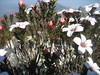
Cape Town South Africa-221The smallest kingdom is the only one that fits inside a single country, South Africa.  Although tiny, it has one of the highest densities of different plant species on the planet.  Mandela declared the Cape Floral Region a UNESCO World heritage site in 2004 because of this unbelievable diversity.  To give a sense of scale, there are more plant species endemic to the top of Cape Towns iconic Table Mountain than there are in the United Kingdom. 

The biological diversity of this small part of the world is matched by it's ethnic and cultural diversity.  The southern tip of Africa has been a busy since long before history has been recorded.  Ever since Cape Town was established by Europeans it has been a vital port city and embraced immigrants from all over the world.  Nearly every european power is represented, the huge Bo-Kaap neighborhood is historically muslim Malay, and it proves almost irresistible to every expat who visits.  It took all our willpower to escape from  Cape Town to the final leg of our journey to our new home in Tanzania.
Cape Town South Africa-599
The colorful Bo-Kaap neighbood of Cape Town

The National Gallery in Capetown is remarkable and worth a visit, play the above slideshow to see some of our favorite pieces!

Sep 6, 2010

Nonexistent Nation

Port St Johns South Africa-166   You just can't make this stuff up.  Imagine a tiny 'nation' that tried to secede from the brutal regime of the South Africa.  And instead of waging a civil war to keep it the South African Prime Minister (and former Nazi) declared it an independent republic by referring to 'the right of every people to have full control over its own affairs' which was just a wee bit ironic considering he also staunchly also supported apartheid.
Port St Johns South Africa-46Port St Johns South Africa-125   So this newly independent state was no longer South Africa, it became the Transkei with it's own flag, government, and military for 18 years.  The only problem?  South Africa was also the only country on the planet that recognized it.  Despite their best efforts, the rest of the world (and the ANC) refused to let South Africa give it up.  It's a peculiar situation, and one that only got stranger in 1978 when the leaders of the Transkei got so frustrated with South Africa that they cut off all diplomatic ties.  Which means they cut off all relations with the only country that acknowledged their very existence. 
This all ended in 1994.  Nelson Mandela was released, apartheid was eliminated, the constitution was rewritten, and the Transkei was welcomed back into South Africa.  Which was very convenient,  because both Mandela and the next president Thabo Mbeki weren't actually from South Africa.  They were both born in the Transkei.  
Port St Johns South Africa-151

With a history like that, Erin and I couldn't resist visiting.  We navigated some long rides off the beaten path to a little coastal town called Port St Johns.  The wilderness was lush and diverse, people were friendly, laidback and integrated.  More than anything, after a long scramble along the garden route Erin and I needed a place slow down, relax and spend our days hiking and watching the waves crash onto the beach from hammocks.

Sep 1, 2010

Galavanting around the Garden route

Storms River South Africa-62
Beautiful coastal landscape, a region of vineyards renowned the world over, high end homes, strip malls, navigating as helpless pedestrians in a car culture... our trip along the Southern California African coast was fascinating and energizing.

Cape Town South Africa-513I remember learning about South Africa politics as a child.  This proud bastion of legal racism drove my late great uncle Pat crazy with frustration.  He explained the concept of Apartheid in words simple enough that I could grasp it, but never in such a way that I have ever been able to understand it.  The task of making those laws itself proves their insanity.  When creating inhuman laws for humans, the details keep compounding complexity well past the point of absurdity.  They could make a law that said blacks and whites had different legal rights ... but what about mixed-races?  Or people that weren't 'native' but also weren't exactly aryan?  Before long high courts had to develop long list of criteria, as absurd as 'if the hair is curly enough to support a pencil then they are black.'  But when that petty distinction can have a massive impact on everything about how a person lives, one has to wonder if the high court had to weigh on on whether hair straighteners were a legitimate way to 'change races.'  At some point, I've got to believe, that even the people creating the laws realized how ridiculous it had gotten.

Hermanus South Africa-24
At the time I couldn't understand why Pat thought a man thrown in prison a generation ago would still be able to change things.  But in the final years of his life Pat got to live in a world where that man, Mandela, was released and helped rebuild South African law from the ground up.  Unfortunately, there is more to ending discrimination than law and that was a reality that kept screaming out to Erin and I while we travelled along the legendary 'Garden Route.'  The major cities along the coast are immaculate, well guarded, and look like a beautiful cross between Europe, California and an army base.  Without exception people were kind, friendly and engaging but the constant reminders of economic segregation hung in the air.  Cities the hummed with activity during the day shut down at night, when the last bus to the townships took the workers back to the townships and others barricaded themselves in each night.

Buffelsbaai South Africa-1The Garden route is aptly named as it had some of the most spectacular fauna I've seen anywhere in the world.  South Africa has barely 1% of the worlds landmass, but nearly 10% of the worlds plant species.  In some parts of the Colorado Rocky Mountains you can hike all day and see only one or two species of trees.  In South Africa, its almost impossible to open your eyes without seeing a dozen.  The topography itself is magical, we sat on top of a cliff and watched surfers and a couple whales play in the bay for over an hour.  We camped on empty beaches that looked like an artists rendering of 'the ideal beach.'  We saw dozens of different types of birds on long hikes out of the back door of our 18th century Dutch farmhouse.

Storms River South Africa-85
It was a remarkable and worthwhile trek through half a dozen destinations, but halfway up the coast both Erin and I were craving something a little more 'cultural.'  We'd heard legends about a formerly independent nation hidden inside of South Africa that only South Africa recognized.  It sounded like a fascinating place.  It was far poorer than it's "neighboring," country but also without the painful history of Apartheid.  But that is a story for another blog post....